
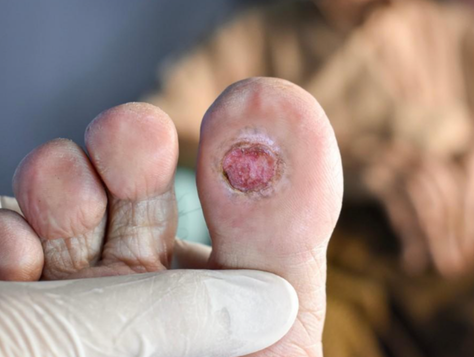
A blister from a new shoe. A small cut on your toe. A sore you notice only when taking off your socks.
If it does not hurt, it may seem unimportant.
But diabetes can damage nerves and reduce feeling in your feet. That means a wound can develop without the pain you would normally expect. Diabetes can also reduce blood flow, making wounds harder to heal.
Pain is not a reliable way to judge whether a foot wound needs attention.
Why can a wound go unnoticed?
Diabetic neuropathy is nerve damage associated with diabetes.
It can cause tingling, burning, or numbness. When feeling is reduced, you may not notice a blister, pressure from a shoe, or even a small object inside your sock. An injury can continue to worsen without a strong warning signal.
That is why looking at your feet matters—even when they feel fine.
What does circulation have to do with healing?
Healing tissue needs oxygen and nutrients delivered through the bloodstream.
Peripheral artery disease, or PAD, narrows arteries and reduces blood flow to the legs and feet. When diabetes-related nerve damage and PAD occur together, an injury may go unnoticed while reduced circulation makes healing more difficult.
A slow-healing wound may need more than a new bandage. It may need an assessment of blood flow.
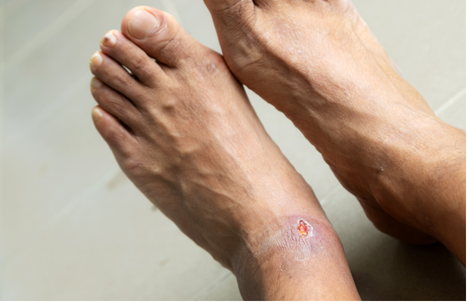
Make a daily foot check a habit
If you have diabetes, check your feet every day, including the soles and between your toes.
Look for:
Cuts, blisters, or open sores.
Red spots or swelling.
Areas that look irritated by your shoes.
Warm spots or other new skin changes.
Calluses with dried blood underneath.
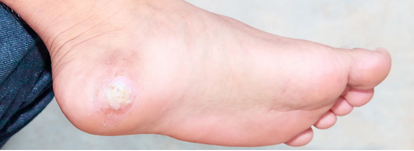
Use a mirror or ask someone to help if you cannot see the bottoms of your feet. Check inside your shoes before putting them on, and wear properly fitting shoes and socks to help prevent injury.
When should you call your provider?
Contact your healthcare provider promptly about a new foot wound if you have diabetes or reduced feeling in your feet. Call right away if a cut or blister is not beginning to heal after a few days, or if the skin becomes red, warm, or painful. Do not wait for pain to develop before asking for help.
Blackened skin or a foul-smelling wound needs immediate medical attention.
Your care team may include your primary care provider, a podiatrist, a wound-care specialist, and a vascular specialist when blood flow is a concern.
Texas Cardiac & Vascular Institute evaluates vascular conditions that may contribute to poor circulation and slow healing.
Schedule a vascular evaluation at a TCVI location in Austin, Corpus Christi, San Antonio, or Seguin. An infected or rapidly worsening wound needs prompt medical care, not a delayed routine appointment.
Quick answers
Can a diabetic foot wound be painless?
Yes. Diabetes-related nerve damage can reduce sensation, so a blister or sore may not hurt. Lack of pain does not mean the wound is harmless.
Can poor circulation slow wound healing?
Yes. Reduced blood flow can limit the oxygen and nutrients reaching a wound, making healing more difficult.