
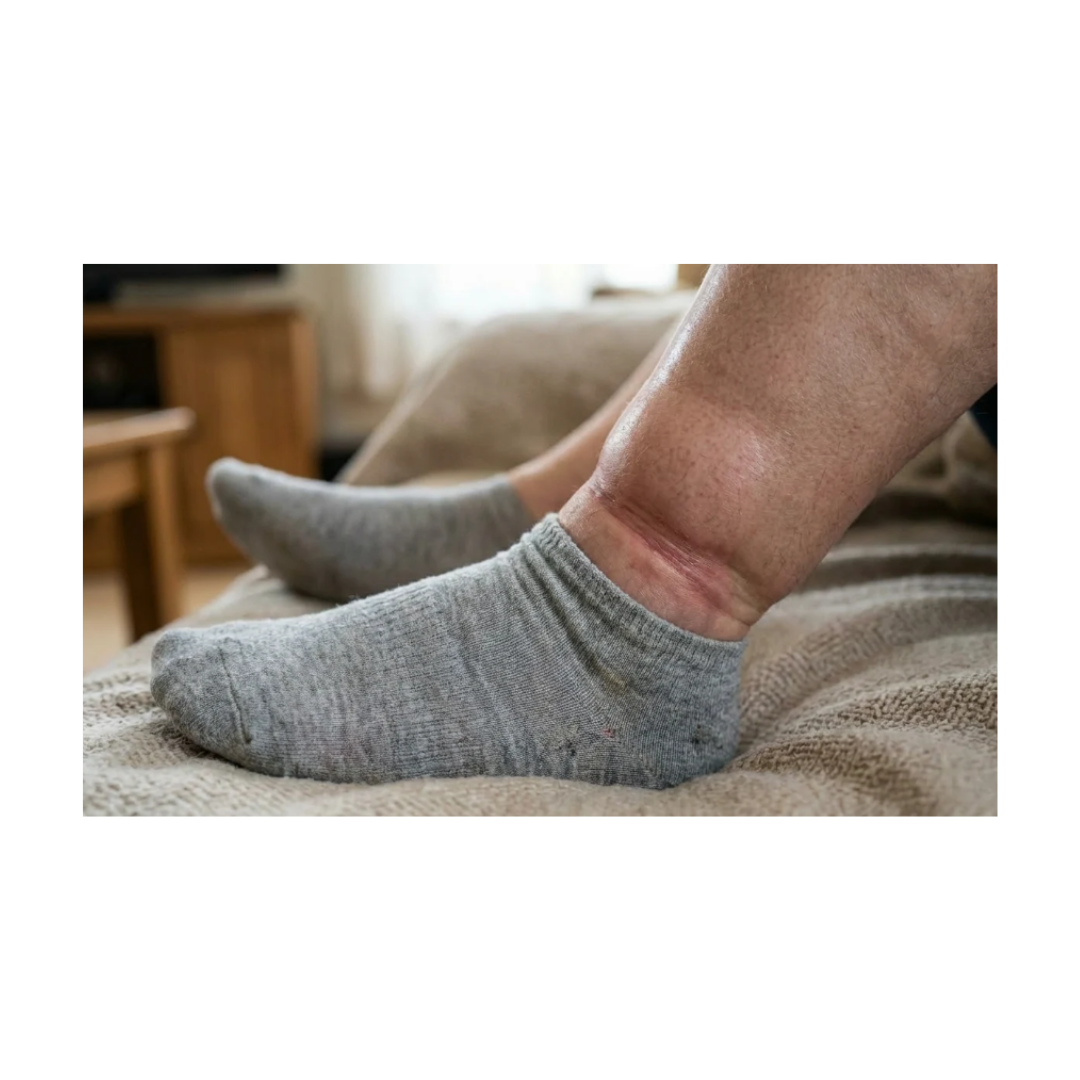
You take off your socks at the end of the day and see a ring around your lower legs.
Sock elastic can leave an impression. But deep marks accompanied by puffy ankles may reflect swelling, not just tight socks. A pronounced indentation can occur with edema—the medical term for fluid buildup in body tissues.
The mark alone cannot tell you what is causing it.
What do sock marks have to do with veins?
Your leg veins carry blood back toward your heart. Valves inside those veins help prevent blood from flowing backward.
When the valves do not work properly, blood can pool and pressure can build in the legs. This may lead to swelling around the ankles and lower legs, often after prolonged standing or toward the end of the day.
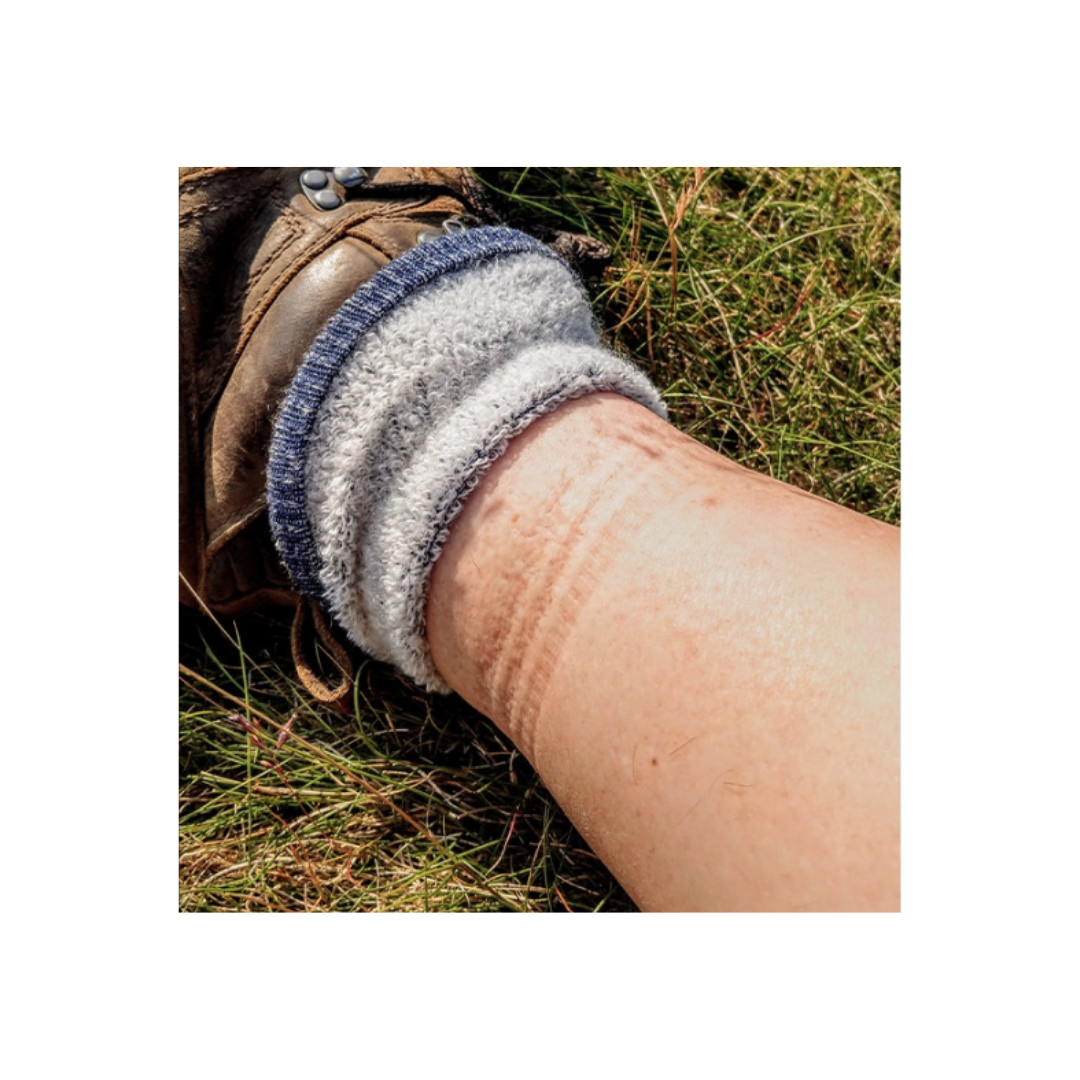
That extra fluid can make a sock’s elastic band leave a more noticeable dent.
Does swelling always mean poor circulation?
No. Leg swelling has several possible causes.
Long periods of sitting or standing, certain medications, and conditions affecting the heart, kidneys, or liver can also contribute. Vein problems are one possibility—not a diagnosis you can make from a sock mark.
Recurring swelling is a reason to ask questions rather than keep buying looser socks.
What changes should you notice?
Tell your healthcare provider if you notice:
Swelling that keeps returning.
Deep indentations around swollen ankles.
Aching or heaviness in your legs.
Itching or reddish-brown skin changes.
Open sores near the ankles.
Your provider can evaluate the pattern of swelling and determine whether vein testing or another medical assessment is appropriate.
Should you try compression socks?
Ask your provider first.
Compression can help some people with swelling and venous disease, but the type and pressure should match your needs. People with peripheral artery disease may need special precautions, and compression may not be appropriate in some cases.
For ordinary breaks during the day, avoid sitting or standing still for long stretches and include gentle movement as tolerated. Do not use home measures to delay evaluation of new or unexplained swelling.
When is swelling urgent?
Seek immediate medical assessment for new swelling in only one leg, especially with pain or skin discoloration. If swelling occurs with chest pain or sudden shortness of breath, call 911 rather than waiting for a routine appointment.
For ongoing symptoms, Texas Cardiac & Vascular Institute can help evaluate whether a vascular condition may be involved.
Schedule a vascular evaluation at a TCVI location in Austin, Corpus Christi, San Antonio, or Seguin.
Quick answers
Do sock marks mean I have vein disease?
Not necessarily. Sock marks alone do not diagnose a condition. Deep marks with recurring swelling should be discussed with a healthcare provider.
Why are my ankles more swollen at night?
Fluid can accumulate in the lower legs during the day, especially after prolonged sitting or standing. Vein valve problems can contribute, but other causes are possible.